
In Tampa, HVAC systems operate under a combination of high heat, persistent humidity, and coastal air exposure. Long cooling seasons, moisture-heavy air, and frequent summer storms place unique stress on air conditioning systems. Because humidity control is critical for comfort and indoor air quality in Tampa, deciding whether to repair or replace an HVAC system depends on system age, moisture-related wear, and efficiency under continuous operation.
When repair usually makes sense
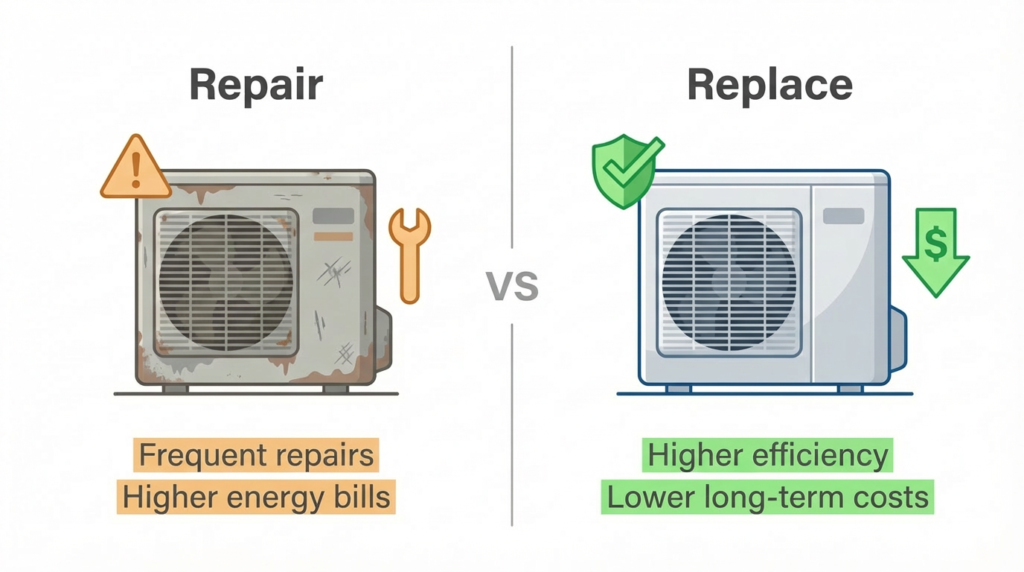
Repair is often the better option when the system is under 8–10 years old, the repair cost is less than 30% of replacement, and the issue involves a single component such as a capacitor, contactor, blower motor, or thermostat. In Tampa, systems that still remove humidity effectively and have not experienced repeated summer failures are often worth repairing.
When replacement is usually the better choice
Replacement is typically the smarter decision when the system is 12 years or older, major components fail, or the unit struggles to manage indoor humidity even while running constantly. In Tampa, HVAC systems that cool the air but leave the home feeling damp or musty often signal declining performance. Rising energy bills, corrosion-related failures, and frequent breakdowns during peak humidity are common signs that replacement will provide better long-term value.
Repair vs replacement rule of thumb
• Systems under 8 years old with repair costs below 30% of replacement are usually worth repairing
• Systems between 8 and 12 years old require a case-by-case decision based on reliability
• Systems over 12 years old with repair costs above 40% of replacement are typically better replaced
Because Tampa systems operate for long periods in humid conditions, moisture-related wear often accelerates over time.
Common HVAC problems homeowners face
Tampa homeowners frequently experience evaporator coil corrosion, clogged condensate drain lines, blower motor strain, mold or mildew buildup, refrigerant leaks, and salt-air corrosion on outdoor components. High humidity and coastal conditions contribute to issues that are less common in drier or inland regions.
Typical HVAC replacement costs
In Tampa, central air conditioning replacement typically ranges from $5,500 to $11,500+, while full HVAC system replacement often falls between $8,000 and $18,000+. Final costs depend on home size, system efficiency, duct condition, and whether enhanced humidity-control features are included.
Why energy efficiency matters
Energy efficiency is especially important in Tampa because HVAC systems run for extended periods to manage both temperature and humidity. Newer systems with variable-speed operation and improved moisture removal can reduce energy use while improving comfort. Over time, higher-efficiency systems often offset higher upfront costs through lower monthly utility bills.
Common mistakes homeowners make
Many homeowners continue repairing systems that cool adequately but fail to control humidity, leading to comfort issues and indoor air quality problems. Others replace systems without addressing ductwork, drainage, or airflow issues, which can limit the benefits of a new installation. Ignoring moisture control is one of the most common mistakes in Tampa homes.
Final decision checklist
Before deciding, consider the system’s age, repair history, ability to control humidity, summer energy costs, and how long you plan to stay in the home. In Tampa, the best decision is usually based on moisture control, long-term reliability, and total operating cost rather than the immediate repair bill.