
In Phoenix, HVAC systems endure some of the harshest operating conditions in the country. Extreme summer heat, long cooling seasons, and nonstop air conditioning place significant strain on compressors, capacitors, and coils. Because of this, HVAC systems in Phoenix often reach end-of-life sooner than similar systems in milder climates. Deciding whether to repair or replace depends heavily on system age, repair cost, and summer reliability.
When repair usually makes sense
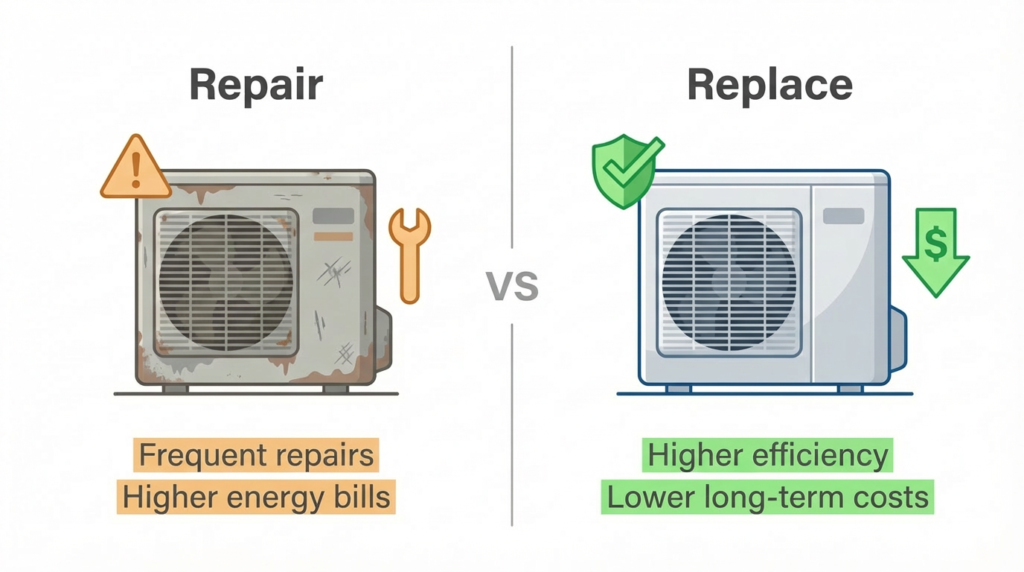
Repair is often the smarter option when the system is under 8–10 years old, the repair cost is less than 30% of replacement, and the issue involves a minor or moderate component such as a capacitor, contactor, fan motor, thermostat, or electrical connection. In Phoenix, systems that have not failed repeatedly during extreme heat waves are often still worth repairing.
When replacement is usually the better choice
Replacement is typically the better decision when the system is 12 years or older, a major component fails (such as the compressor or evaporator coil), or the unit struggles to keep up during peak summer temperatures. In Phoenix, repeated breakdowns during heat waves are a strong indicator that the system is nearing the end of its usable life. Rising energy bills and longer run times are also common signs that replacement will be more cost-effective.
Repair vs replacement rule of thumb
• Systems under 8 years old with repair costs below 30% of replacement are usually worth repairing
• Systems 8–12 years old fall into a case-by-case decision range
• Systems over 12 years old with repair costs above 40% of replacement are typically better replaced
Because Phoenix heat accelerates wear, these thresholds tend to be stricter than national averages.
Common HVAC problems homeowners face
Phoenix homeowners frequently encounter capacitor burnout, compressor overheating, coil degradation, refrigerant issues, and airflow strain caused by long cooling cycles. Capacitors, in particular, fail more often in extreme heat, while compressors experience additional stress due to extended daily operation.
Typical HVAC replacement costs
In Phoenix, central air conditioning replacement typically ranges from $5,000 to $10,000+, while full HVAC system replacement commonly falls between $7,500 and $16,000+. Pricing varies based on home size, efficiency rating, ductwork condition, and demand during peak summer months when installation schedules are tight.
Why energy efficiency matters
Because cooling systems run for much of the year, higher-efficiency HVAC systems can significantly reduce monthly electricity bills in Phoenix. Newer systems are designed to handle extreme heat more effectively while using less energy, allowing long-term savings to offset higher upfront costs faster than in cooler regions.
Common mistakes homeowners make
Many homeowners continue repairing aging systems too long because the unit still runs, only to face repeated breakdowns during extreme heat. Others replace systems under pressure during peak summer months without comparing total long-term costs. Ignoring efficiency ratings and operating costs is another common and expensive mistake.
Final decision checklist
Before deciding, consider the system’s age, repair history, reliability during extreme heat, summer energy costs, and how long you plan to stay in the home. In Phoenix, the best decision is usually based on long-term reliability and total operating cost, not just the immediate repair bill.